
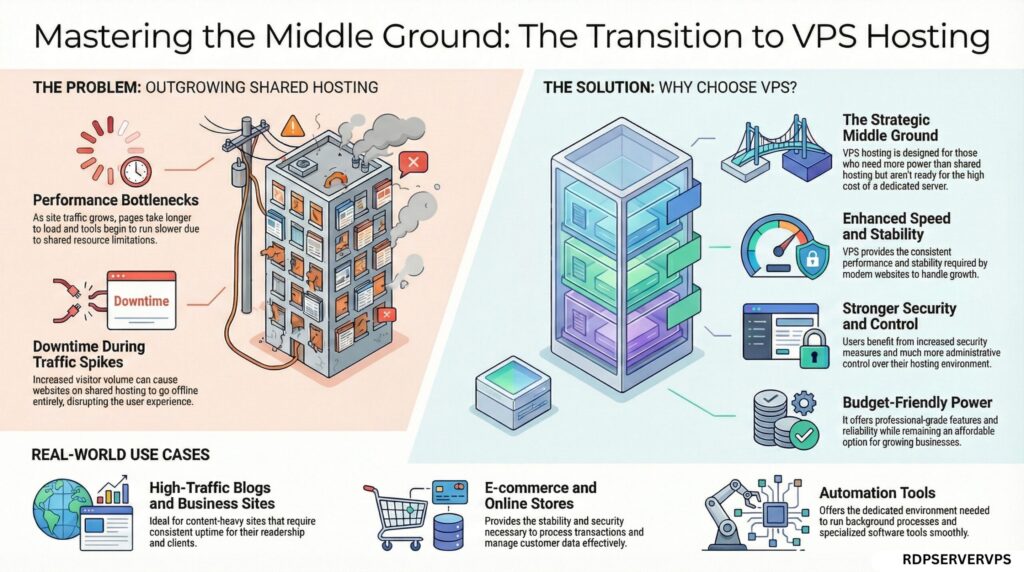
When you first launch a website, shared hosting usually feels enough. It’s cheap, simple, and works fine when traffic is low. But as your site grows, things start changing. Pages take longer to load, tools run slower, and sometimes your website even goes offline during traffic spikes. That’s when most people begin searching for something more powerful but still affordable.
This is where VPS hosting comes in.
VPS hosting is designed for websites and online projects that have outgrown shared hosting but aren’t ready for the high cost of a dedicated server. It offers better speed, stronger security, and much more control while still staying budget-friendly. Whether you’re running a blog, online store, automation tools, or business website, VPS hosting gives you the stability modern websites need.
In this guide, we’ll go deep into what VPS hosting really is, how it works, when you should use it, and why it has become one of the most popular hosting options today.
What Is VPS Hosting?
VPS stands for Virtual Private Server. Simply put, host VPS hosting is a web hosting solution where a single physical server is divided into several independent virtual servers. Each virtual server operates like a standalone machine with its own operating system, dedicated CPU power, RAM, and storage resources.
So whether someone asks what is VPS hosting is, what is VPS web hosting, what is VPS server hosting, or what is a VPS hosting, the concept remains the same. You get a private server environment within a larger physical server, without sharing your resources with other users.
Unlike shared hosting, where many websites rely on the same pool of resources, VPS hosting ensures your performance stays consistent and unaffected by others. This is why VPS hosting delivers better speed, stronger security, and higher reliability.
For most growing websites, VPS hosting is considered the ideal balance between the affordability of shared hosting and the power of a dedicated server.
How VPS Hosting Works Behind the Scenes
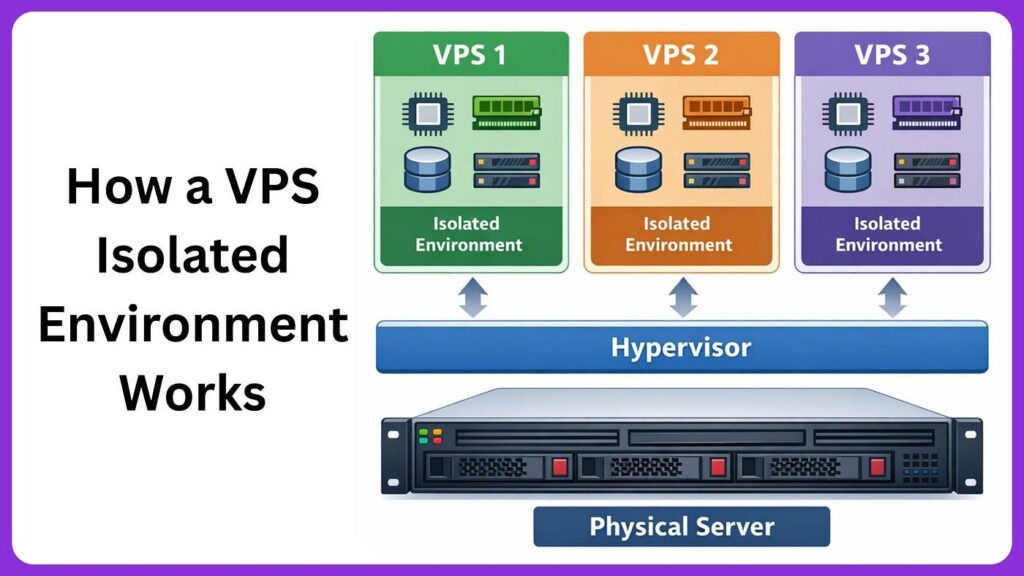
A powerful physical server runs special virtualisation software that allows it to be split into several virtual machines. Each virtual machine becomes its own host VPS.
Every VPS has:
- Its own operating system (Linux or Windows)
- Guaranteed CPU power
- Dedicated RAM
- Separate storage space
Even though all budget VPS servers live on the same physical machine, they remain fully isolated from one another. One user’s traffic spike or software issue does not affect anyone else.
Think of it like renting an apartment. You share the building structure, but your apartment has its own rooms, electricity, and privacy. That’s exactly how virtual server hosting works.
Types of VPS Hosting
Managed VPS Hosting
With managed VPS hosting, the hosting provider handles the technical side for you. This includes server setup, security updates, monitoring, performance optimisation, and backups.
It’s ideal for:
- Beginners
- Business owners
- Bloggers
- eCommerce stores
If you want the power of VPS hosting without technical stress, managed VPS is the easiest option.
Unmanaged VPS Hosting
With unmanaged VPS hosting, you control everything yourself. You install the operating system, configure security, manage software, and monitor performance.
This option is best for:
- Developers
- System administrators
- Advanced users
It offers maximum flexibility but requires technical knowledge.
VPS Hosting vs Other Hosting Options
| Hosting Type | Resources | Performance | Control | Cost | Best For |
| Shared Hosting | Shared among many users | Low to moderate | Very limited | Very cheap | Small blogs and beginners |
| VPS Hosting | Dedicated virtual resources | High and stable | Full control | Medium | Growing websites & businesses |
| Dedicated Hosting | Entire physical server | Very high | Complete control | Expensive | Large enterprises |
| Cloud Hosting | Multiple connected servers | Highly scalable | Moderate to high | Variable | Traffic-heavy projects |
Host VPS stands out because it delivers serious performance without the high price of dedicated servers.
Why VPS Hosting Is So Popular Today
Better Speed and Performance
Since your resources are dedicated, your website runs smoothly even during high traffic. Pages load faster, scripts execute quicker, and background tasks run without lag.
This is one of the biggest reasons people switch from shared hosting to best VPS hosting plans.
Stronger Security
Shared hosting is risky because one infected website can impact others on the same server. With VPS hosting, your server environment is isolated.
This means:
- Better protection from malware
- Stronger firewall control
- Safer customer data
For businesses and online stores, VPS hosting is a huge security upgrade.
Full Control Over Your Server
VPS hosting allows you to:
- Install custom software
- Adjust server configurations
- Choose your OS
- Optimize performance
This flexibility makes VPS hosting perfect for developers and advanced projects.
Easy Scalability
As your website grows, you can easily upgrade your VPS resources. Add more RAM, CPU power, or storage without changing hosting providers.
This makes VPS hosting future-proof.
Affordable Power
Many people assume VPS hosting is expensive, but today there are plenty of:
- cheap VPS server plans
- Budget VPS hosting options
- cheapest VPS hosting deals
You get powerful performance at a reasonable price.
Real-Life Use Cases of VPS Hosting
So what is VPS hosting used for in real life?
High-Traffic Websites
News sites, popular blogs, and content platforms that outgrow shared hosting.
Online Stores
Fast checkout, strong security, and stable performance for customers.
Automation Tools
SEO tools, bots, background scripts, and data processing.
Web Applications
Dashboards, SaaS platforms, APIs, and custom software.
Game Servers
Private multiplayer environments.
Development Environments
Testing, staging, and software development projects.
If performance and stability matter, VPS hosting is usually the right choice.
Understanding VPS Hosting Resources
CPU: Controls processing power. More cores mean faster performance.
RAM: Handles active tasks and traffic load. More RAM improves stability.
Storage: SSD storage is best for speed and reliability.
Bandwidth: Manages traffic flow.
Balanced resources ensure smooth website performance.
When Should You Move to VPS Hosting?
You should seriously consider VPS hosting if:
- Your website feels slow
- Traffic is increasing
- Shared hosting limits are holding you back
- You need better security
- You want more control
For most growing websites, VPS hosting is the natural next step.
Common VPS Hosting Challenges (And How to Handle Them)
Server Management
If technical tasks feel overwhelming, choose managed VPS hosting.
Security Configuration
Use firewalls, updates, backups, and strong login methods.
Performance Monitoring
Most VPS providers offer dashboards to track usage.
With modern hosting platforms, these challenges are much easier than they used to be.
How to Choose the Best VPS Hosting Provider
Look for:
- SSD storage
- Guaranteed resources
- High uptime (99.9%+)
- Built-in security features
- Easy scalability
- Reliable customer support
These factors separate average hosts from top VPS hosting providers.
Final Thoughts
VPS hosting has become one of the smartest hosting solutions for growing websites. It delivers speed, stability, security, and control without the massive cost of dedicated servers.
If you’re serious about performance and future growth, VPS hosting is not just an upgrade. It’s a long-term solution.
Whether you’re running a business website, using automation tools, operating an online store, or building a content platform, VPS hosting provides the reliability modern projects demand.
Frequently Asked Questions About VPS Hosting
1. What is VPS hosting, and how is it different from shared hosting?
VPS hosting provides a private virtual server with dedicated resources like CPU, RAM, and storage, while shared hosting distributes the same resources among many websites. This results in better performance, stronger security, and more control with VPS hosting.
2. What is VPS hosting used for in real-world websites and applications?
VPS hosting is commonly used for high-traffic websites, online stores, automation tools, web applications, and development environments. It ensures stable performance, faster loading speeds, and better security compared to shared hosting, especially during traffic spikes.
3. Is VPS hosting suitable for beginners with limited technical knowledge?
Yes, beginners can easily use VPS hosting by choosing managed VPS plans. In managed hosting, the provider handles server setup, updates, security, and maintenance, allowing users to focus on their website without dealing with technical complexities.
4. How do I know when it’s time to upgrade from shared hosting to VPS hosting?
You should consider upgrading when your website experiences slow loading times, frequent downtime, traffic growth, or security limitations. VPS hosting offers dedicated resources and scalability, making it ideal for growing websites that need consistent performance.
1 thought on “What Is VPS Hosting? Beginner Guide With Real Use Cases”
Comments are closed.