

Shared Hosting vs VPS Hosting: Which One Is Right for Your Website in 2026?
Choosing the right hosting solution can directly impact your website’s speed, security, SEO, and long-term growth. For most website owners, the biggest decision comes down to Shared Hosting vs VPS Hosting.
At first glance, both sound similar. After all, both allow your website to live on a server connected to the internet. But the way resources are handled, performance is delivered, and control is provided makes a huge difference.
Some websites run perfectly for years on shared hosting. Others quickly outgrow it and need VPS power. The real question is not which one is “better”, but which one fits your needs today and tomorrow.
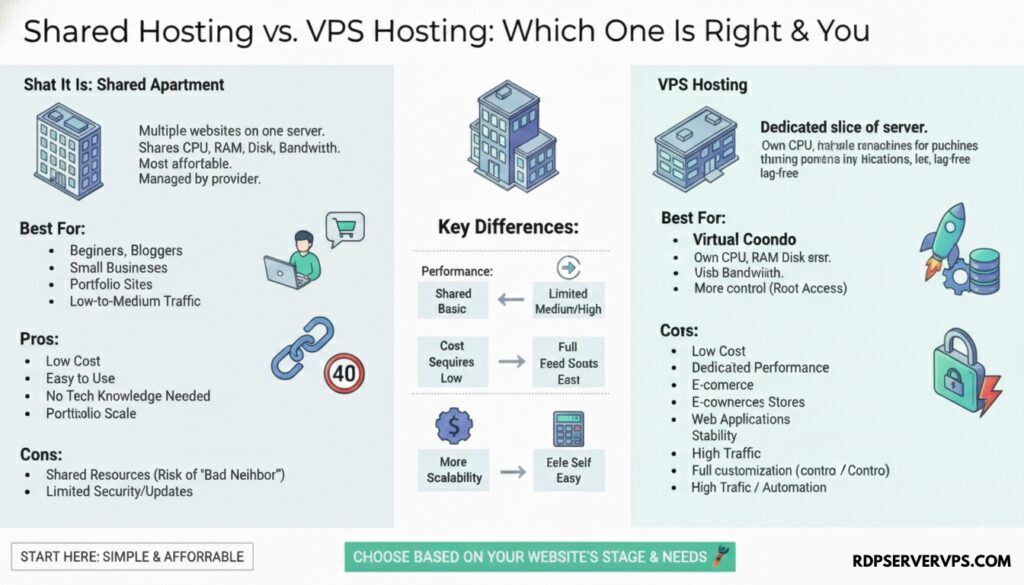
Let’s break it down in a simple, real-world way.
What Is Shared Hosting?
Shared hosting (also called shared web hosting) is a type of hosting where multiple websites live on the same physical server and share its resources like CPU, RAM, storage, and bandwidth.
Think of it like renting an apartment in a large building. You have your own space, but water, electricity, and infrastructure are shared with other tenants.
Because costs are split between many users, shared hosting plans are usually the most affordable way to launch a website.
How Shared Hosting Works
Your hosting provider manages the server completely. They handle:
• Server maintenance
• Security updates
• Software setup
• Technical monitoring
You simply upload your website, manage it through a control panel, and focus on your content or business.
This is why shared hosting is extremely popular with:
• Beginners
• Bloggers
• Small businesses
• Portfolio websites
• Local service websites
Benefits of Shared Hosting
1. Very Affordable
Shared hosting is often the cheapest way to host a website. It’s perfect for anyone starting online without a big budget.
2. Easy to Use
No technical knowledge required. Everything is handled by the provider.
3. Managed Environment
Security patches, server performance, and updates are done for you.
4. Great for SEO Basics
Fast enough load speeds, stable uptime, and reliable performance for most small to medium sites.
This is why many people looking for the best shared hosting choose this option first.
Limitations of Shared Hosting
• Resources are shared with other websites
• Heavy traffic on one site can impact others
• Limited server customization
For most sites, these limits never become an issue. But for fast-growing or high-traffic projects, they can.
What Is VPS Hosting?
VPS hosting (Virtual Private Server hosting) uses virtualization technology to divide one physical server into multiple independent virtual servers.
Each VPS has:
• Its own allocated CPU
• Dedicated RAM
• Private storage
• Separate operating environment
It’s like owning a condo instead of an apartment. You still share the building, but your resources are reserved only for you.
This is why many people ask:
What is VPS hosting, and why is it faster?
Simply because no other website can steal your resources.
How VPS Hosting Works
Hypervisor software creates multiple virtual servers on a single machine. Each VPS behaves like a mini dedicated server.
You typically get:
• Root or admin access
• Full software control
• Custom configurations
• Scalable resources
This puts VPS hosting between shared hosting and dedicated servers in terms of power and price.
Benefits of VPS Hosting
1. Dedicated Performance
Your site isn’t affected by other users.
2. Better Speed & Stability
Great for growing traffic and heavy workloads.
3. Full Control
Install custom software, security tools, and server settings.
4. Easy Scaling
Upgrade RAM, CPU, and storage as your website grows.
This is why many businesses move to VPS when shared hosting starts feeling slow.
Limitations of VPS Hosting
• Costs more than shared hosting
• Requires some technical knowledge
• You manage more of the server environment
People searching for the cheapest VPS hosting often underestimate the technical side involved.
Shared Hosting vs VPS Hosting: Core Differences
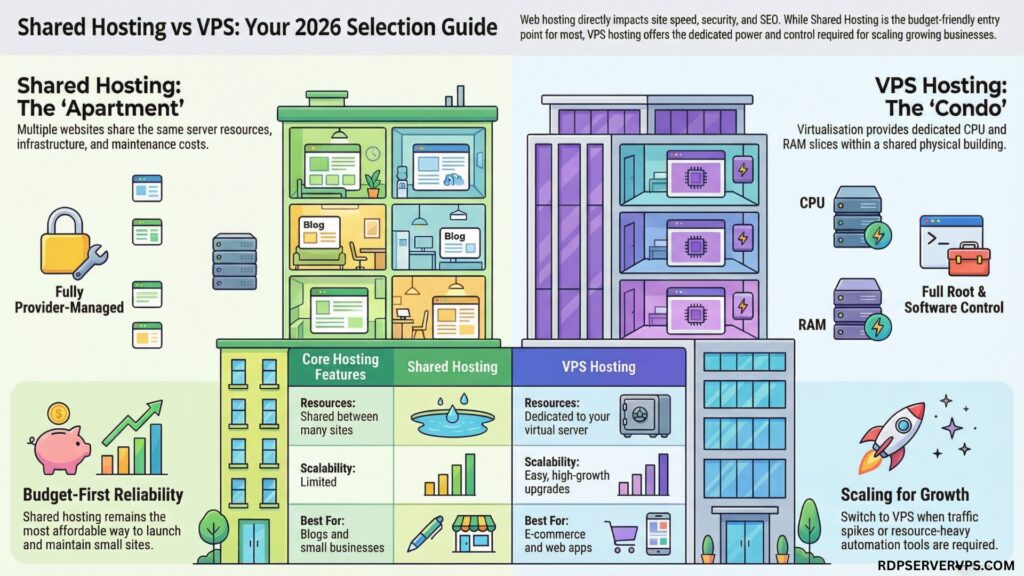
Here’s a clear comparison to make it easy:
| Feature | Shared Hosting | VPS Hosting |
| Resources | Shared between many sites | Dedicated to your VPS |
| Performance | Good for small to medium sites | High & consistent |
| Cost | Very affordable | More expensive |
| Control | Limited | Full control |
| Scalability | Limited | Easy upgrades |
| Security | Basic managed | Strong isolation |
| Best For | Blogs, startups, small businesses | Growing sites, e-commerce, apps |
Performance, SEO, and Reliability
From an SEO perspective, hosting affects:
• Page speed
• Uptime
• User experience
• Core Web Vitals
Shared hosting performs surprisingly well when properly managed. Many websites with tens of thousands of monthly visitors run perfectly fine on shared environments.
VPS hosting shines when:
• Traffic grows fast
• Websites use heavy scripts
• Online stores handle many users
• Automation tools run constantly
If your website is slow because of traffic spikes, a VPS is usually the next step.
Shared Hosting vs VPS vs Dedicated Server
Many people compare VPS vs dedicated server as well.
A dedicated server means you rent an entire physical server alone. It offers massive power but also comes with a very high cost and heavy management.
Quick breakdown:
• Shared hosting = cheapest, easiest
• VPS hosting = balanced power & price
• Dedicated hosting = maximum power, expensive
For most businesses, VPS hosting is more than enough without going fully dedicated.
VPS Hosting vs Cloud Hosting (Quick Note)
Cloud hosting spreads your site across multiple servers instead of one.
VPS hosting vs cloud hosting mainly differ in structure:
• VPS = one physical server, virtual slices
• Cloud = multiple connected servers
Cloud is great for extreme scalability, while VPS offers predictable performance and simpler management.
For most website owners, VPS is easier and more cost-effective.
Who Should Choose Shared Hosting?
Shared hosting is ideal if:
• You’re launching a new website
• You have low to medium traffic
• You want minimal technical work
• You’re on a budget
• You run blogs, portfolios, or business sites
Most websites on the internet still use shared hosting successfully.
Who Should Choose VPS Hosting?
VPS hosting makes sense if:
• Your traffic is growing fast
• Your site feels slow on Shared Hosting vs VPS
• You run e-commerce or web apps
• You need custom server setups
• You use automation or heavy tools
This is where many users start looking for top VPS hosting providers.
Cost Perspective (Realistic View)
Shared hosting plans often start extremely low and stay affordable for years.
VPS hosting is more expensive, especially when adding:
• Management services
• Security tools
• Backups
• Monitoring
That’s why shared hosting remains the best choice for most websites until growth truly demands VPS power.
Final Verdict: Shared Hosting vs VPS Hosting
There is no universal winner. The right choice depends on your website’s stage.
Choose Shared Hosting If:
You want affordability, simplicity, and reliable performance for small to medium sites.
Choose VPS Hosting If:
You need power, control, scalability, and consistent high performance.
For beginners and growing businesses, shared hosting is often the smartest starting point. When traffic and complexity increase, VPS becomes the natural upgrade.
In Simple Words:
Shared hosting = best for starting and steady growth
VPS hosting = best for scaling and performance
If you match your hosting to your actual needs, you’ll save money, avoid headaches, and grow smoothly.
Final Thoughts: Choose Smart Hosting for Long-Term Growth
At the end of the day, the right hosting choice depends on where your website is today and where you want it to go tomorrow.
If you’re just starting out or running a small to medium website, Shared Hosting vs VPS gives you everything you need to grow without unnecessary costs or technical stress. It’s simple, affordable, and powerful enough for most real-world use cases.
But if your traffic is increasing, performance matters more, or you’re building something resource-heavy, VPS hosting can unlock the speed, control, and scalability your project needs.
The smartest move is to start with what fits your current needs and upgrade only when your website truly demands it.
👉 Take a moment to review your traffic, goals, and budget, then choose the hosting plan that supports your growth instead of slowing it down.
Strong foundation today = smoother success tomorrow 🚀
Frequently Asked Questions About Shared Hosting vs VPS Hosting
1. What is shared hosting, and who should use it?
Shared hosting is a web hosting setup where multiple websites share one server’s resources. It is ideal for beginners, bloggers, and small businesses that want affordable hosting with easy management and reliable performance for low to medium traffic levels.
2. What is VPS hosting, and how is it different from shared hosting?
VPS hosting provides dedicated server resources within a virtual environment, offering better performance, control, and stability than shared hosting. Unlike shared hosting, your website is not affected by other users’ traffic or resource usage.
3. Is VPS hosting better for SEO than shared hosting?
VPS hosting can improve SEO by providing faster load times, higher uptime, and consistent performance under heavy traffic. However, well-optimized shared hosting also performs great for small to medium websites without requiring higher costs.
4. When should you upgrade from shared hosting to VPS hosting?
You should consider upgrading to VPS hosting when your website experiences growth in traffic, slower performance, or requires custom server configurations. E-commerce stores, automation tools, and resource-heavy websites often benefit most from VPS environments.